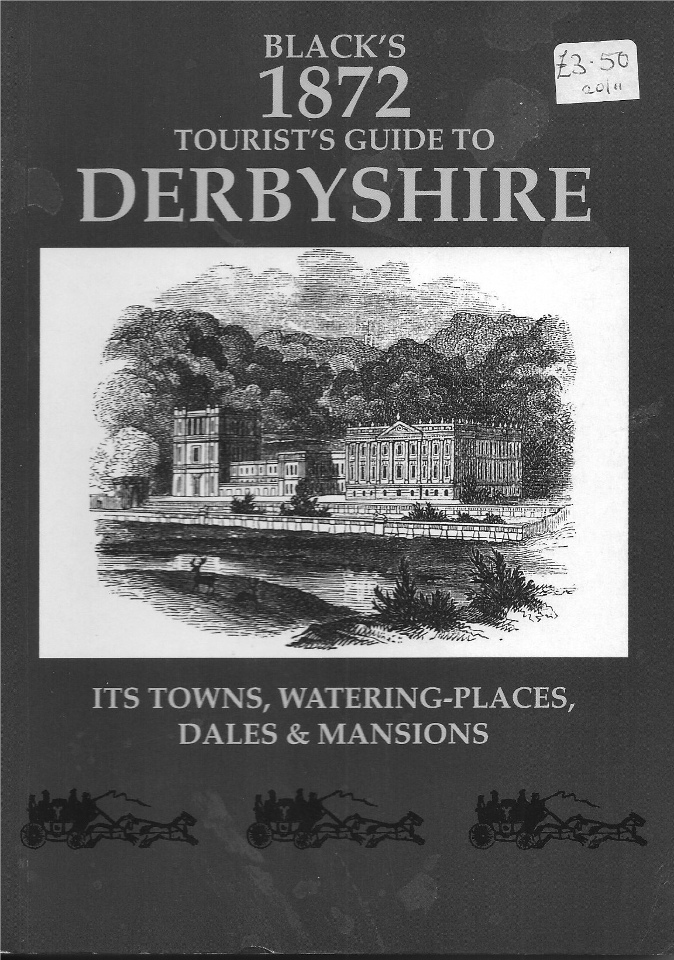
In 1872 the 'BLACKS TOURIST GUIDE TO DERBYSHIRE' was published. He wrote at length about Stoney Middleton, stating: 'The village is remarkably picturesque' The full article has been reproduced below, all grammar and spelling have been left unchanged. STONEY MIDDLETON. Inns.—Moon ; Lover's Leap ; Grouse ; Miners' Arms. From Bakewell,...

Boot making in Stoney Middleton was first recorded in 1797 at Pine View, a small cottage off High Street. By the turn of the last century (1900) the tradition of boot making had expanded into family concerns, and became a major industry for the village. The Stoney Middleton...

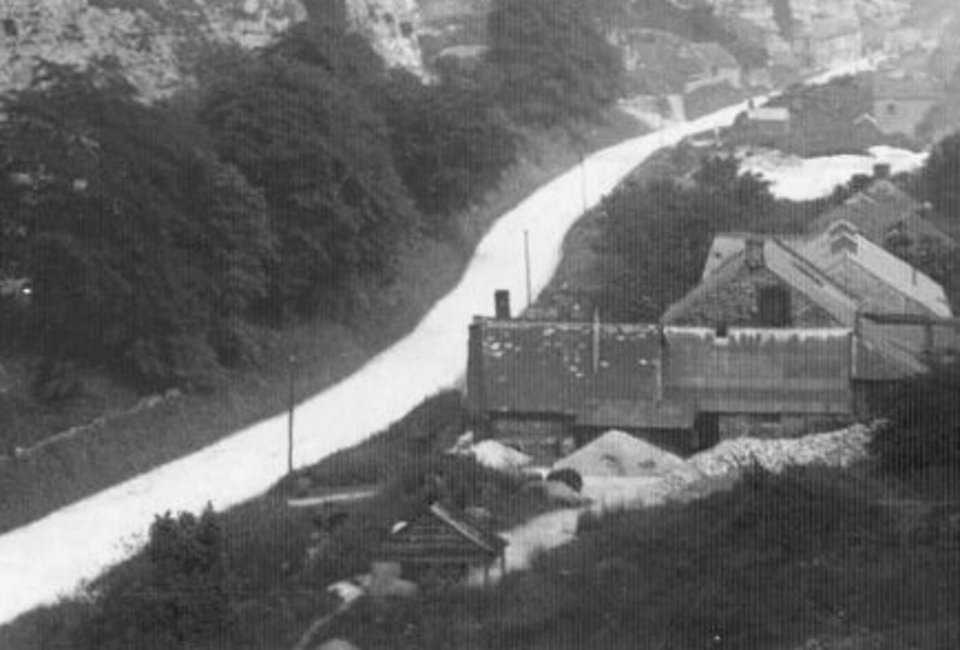
This picture is of the Lords Cupola. It stood on the site of the offices currently occupied by Hargreaves Roadstone Ltd in Stoney Middleton Dale. It is close to The Rock Mill Business Park site on the west side of the village heading towards Tideswell. The tall...

This picture is taken in Stoney Middleton Dale in the direction of Tideswell. The distinctive form of Castle Rock can be seen clearly in the centre of the picture. Castle Rock is opposite Rock mill Business Park which is the last building on the left when leaving the village. It...

Limestone has been quarried in Stoney Middleton dale for centuries, a principle industry and employer during the last century. Thousands of tons of rock have been removed to produce vital minerals and metals and to simply provide stone for construction.The village had many quarries along...

Fluorspar is a critically important industrial mineral which has been mined and processed in Stoney Middleton for hundreds of years and is today the only producer in Britain. Fluorspar is a mineral (calcium fluoride) found with limestone having been deposited within the fissured rock during volcanic...

Lead Smelting is a process where lead is extracted from Galena (lead sulphide) or lead ore. Galena is found in limestone in rakes (seams or veins). Once mined the lead is extracted from the ore by heating it known as smelting. Stoney Middleton Dale had ideal conditions for smelting, it had steep slopes necessary for the draft...

Lime kilns were a major feature of the village until the 1960’s. There are remains of three kilns left in the village including the parish kiln used by farmers for lime to spread on their fields. Burning lime was a very unpleasant activity producing much smoke...